


How to manage prey drive in dogs: Why your dog switches off & how PST helps.

Ever felt invisible the moment a squirrel appears? You’re not alone. Many of us have experienced that heart-sinking moment when our dog bolts, ignoring cues and treats like we’re not even there. But it’s not defiance its biology.
Whether you're walking in Prospect Park, along the Thames Path in Reading or Henley or through Sulham Woods, if wildlife sends your dog into another world, this blog is for you. I share how Predation Substitute Training (PST) transformed my relationship with my own dog, Poppy. Rather than trying to stop her hunting instincts, I learned to work with them, giving her safe, structured ways to express behaviours like stalking, chasing, and dissecting.
Dogs aren’t misbehaving when they hunt. They’re following a hardwired sequence that releases powerful feel-good chemicals like dopamine and endorphins. By helping our dogs complete that sequence through playful, dog-led activities, we reduce frustration and strengthen our connection.
When your dog would rather chase squirrels than listen to you...
You call their name. They pause for a split second then bolt.
It’s like they never heard you.
Your voice, your treats, your cues… they don’t even register.
That sinking feeling of being ignored is tough, especially when you know your dog is capable of coming back. But when a bird flies up or a squirrel skitters by, it’s like a switch flips & you're no longer part of the picture.
If this sounds familiar, you’re not alone. I’ve been there too with Poppy. Before I discovered Predation Substitute Training (PST), our walks in woodland spaces near Reading were tense, disconnected and stressful. I’d leave feeling like I’d failed her—or worse, like she didn’t care. But it wasn’t about defiance. It was biology.
Why hunting isn’t bad behaviour
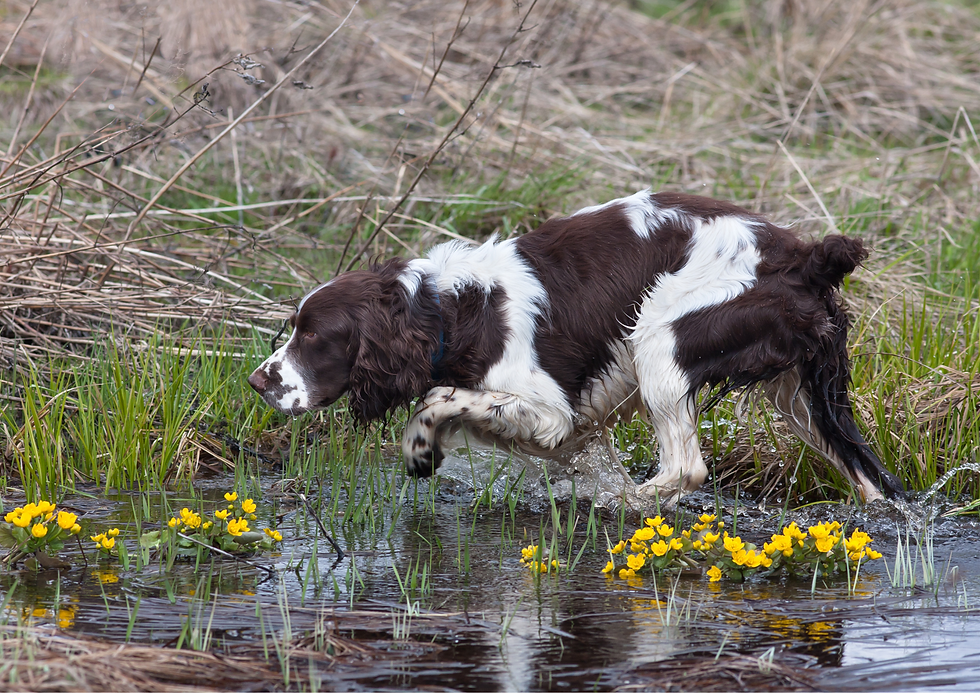
What your dog is doing out there......scanning, sniffing, stalking, chasing, isn’t naughty. It’s instinct. They’re not trying to wind you up. They’re simply following a pattern that’s hardwired into their brain.
It starts before you even realise.
Nose up? They’re scenting.
Still body, eyes locked? That’s a stalk.
Twitching tail, sudden stillness? They’re ready to chase.
The thrill of the hunt activates powerful brain chemistry. Dopamine gives them focus and motivation. Endorphins flood their system during movement. The result? It feels amazing and very difficult to turn away from.
And when dogs don’t get a chance to complete the sequence—when the stalk or chase is interrupted it can leave them frustrated and wound up. That’s often when we see barking, pulling, even tantrum-like outbursts.
Working with predatory drive, not against it
This is where PST changes everything. Instead of trying to block or punish the behaviour, I work with the part of the sequence my dog loves. For Poppy, it was the stalking and watching then the opportunity to chase then grab and dissect. So we made a deal: she could look then when safe gets to chase then join me in a game that completes the chain eating some tasty treats in a way that is motivational and reinforcing .
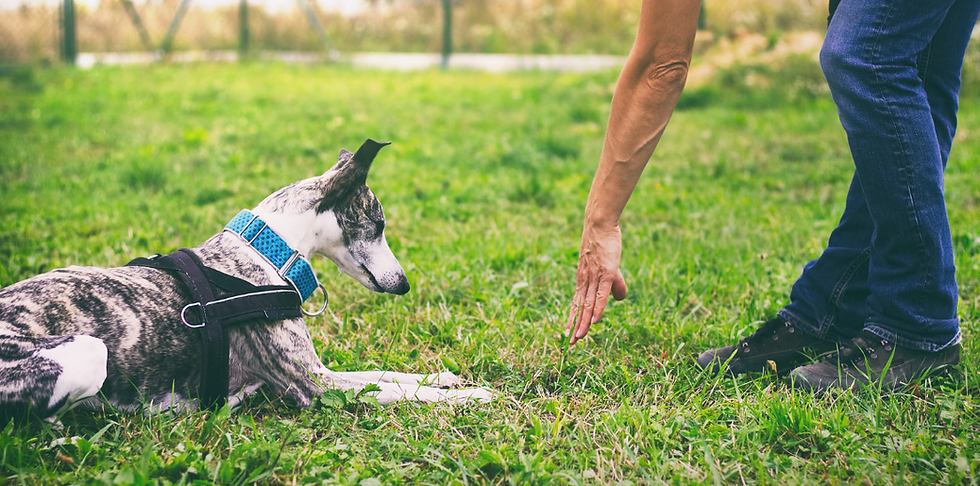
We’d pause together. I’d lower my body, gently place my hand on her shoulder.
We’d watch the deer, the squirrels, the birds.
No cues. No commands. Just presence.
By joining her in the moment, she began to include me in her world. I stopped being the person who interrupted the fun—and became the one who helped her enjoy it safely.
If this sounds like your dog, you're not alone — and there is a way forward. I offer a free discovery call to talk through what's happening on your walks and whether PST could help. Book a chat here.
Every dog has a favourite part of the chain
Some dogs live for the stalk. Others go straight for the chase. Some want to dissect, nibble, shred. (Ever wondered why your dog destroys the post?)
Every part is valid. Every part can be redirected into a safer version.
Here’s what this might look like:
A pointer who loves to scan? Teach them to spot squirrels with you—then stay and watch.
A retriever who loves to retrieve and grab bite? Help them search together with you
A terrier who loves to dissect? Let them shred paper to get to treats - you will never throw a toilet roll away again!
These activities give your dog an outlet. They complete the loop. They feel fulfilled and you stay part of the process.
It’s not about stopping. It’s about sharing.
You’re not trying to turn off your dog’s drive. You’re learning how to become part of it.
When your dog gets to experience the good feelings of dopamine, serotonin and oxytocin with you, everything changes. You’re not just their recall cue—you’re their hunting partner.
🕹️ Game to try: Paper bag dissect game
This one taps into the “dissect and shred” part of the predatory sequence.
What you need:
A paper bag or an empty loo roll
A handful of your dog’s favourite treats
How to play:
Wrap or hide the treats inside the paper bag or loo roll and scrunch it up.
When your dog comes running back to you - throw the item behind you, help them to tear it open if they need it.
Let your dog shred and sniff to their heart’s content.
Not only does this satisfy natural needs, it’s great enrichment for rainy days or post-walk cool-downs.
Frequently asked questions about high prey drive in dogs.
Why does my dog ignore me completely around wildlife?
When your dog locks onto prey, their brain floods with dopamine the same chemical that drives motivation and focus. In that moment, your voice, treats and cues genuinely cannot compete. It's not stubbornness or lack of love it's a powerful biological response that standard training alone rarely addresses.
What is the predatory motor sequence?
It's the chain of behaviours dogs follow when hunting: scent → scan → search → stalk → chase → grab-bite → possess → dissect → consume. Each stage releases feel-good chemicals. When a dog is interrupted mid-sequence — by a lead, a recall, or a correction — they can become frustrated, wound up, or reactive. PST works by helping dogs complete the sequence safely, with you involved. See blog for more info
Is prey drive the same as aggression?
No. Prey drive and aggression are driven by different emotional systems in the brain. A dog chasing a squirrel is not being aggressive — they're following a deeply rewarding instinct. Understanding this distinction is key to choosing the right training approach.
Can any breed have high prey drive?
Yes, though some breeds are selectively bred for stronger drives. Terriers, spaniels, huskies, lurchers, collies and sighthounds often top the list. That said, individual dogs vary hugely. I've worked with Labradors with intense prey drive and terriers who are relatively easy to redirect.
What's the paper bag game and why does it work?
The paper bag game (described in this blog) taps into the dissect and consume stage of the predatory sequence, great for terriers. By letting your dog shred and sniff to find treats, you give them a satisfying end to the hunting loop — which reduces frustration and builds positive association with coming back to you.
If your dog disappears into the undergrowth the moment they smell wildlife, it’s not because they don’t love you. It’s because their brain is chasing something it was designed to do.
PST lets us honour that. Instead of trying to stop the chase—we share the hunt.
💬 Want to learn how this could work for your dog? Drop me an email at hello@barkshiredogtraining.com and let’s have a chat about the unique ways your dog sees the world.

Comments