


My dog reacts to other dogs on walks. Will It ever get better?Support for you and your dog, from a force free trainer in Reading, Berkshire

There is a belief that quietly follows a lot of dog owners with older dogs. The idea that if things have not changed by now, they probably will not. That the window for training has somehow closed. That you just have to manage.
Denise felt that way too. And then things changed.
Meet Leo
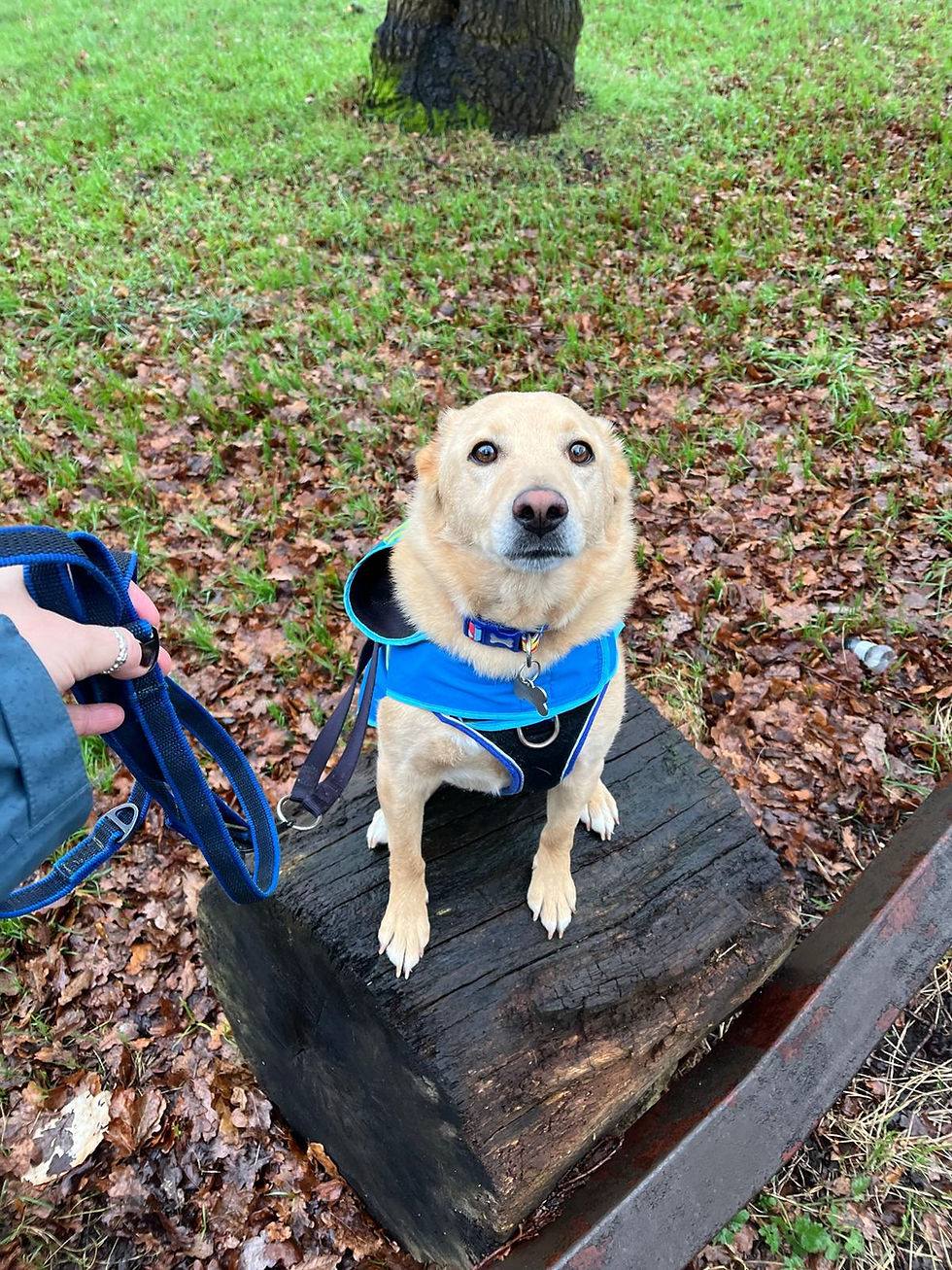
Leo is an eight year old Jack Russell Bichon Frise cross, and he is full of character. He is also the kind of dog who finds a busy, unpredictable environment genuinely difficult. Wildlife darting across the path. A dog appearing from nowhere and running straight over. The kind of moments that happen on almost every walk in Reading and Caversham, and that Leo found hard to handle calmly.
For Denise, those moments had started to feel loaded. She was already carrying her own worry about dogs off the lead, and when the environment became chaotic, that tension travelled straight down the lead to Leo. Each walk started to feel like something to get through rather than something to enjoy.

The real challenge was not just Leo
This is something I see often, and it matters to say it clearly. Sometimes the dog is not the only one who needs support on a walk. Owners, you carry your own history, your own fears, and your own expectations. I know I did. And those things are real. They affect how a walk feels before it has even begun.
Confidence at both ends of the lead is something I come back to again and again when working with my clients and my own dogs. It is important because when an owner feels anxious, that tension travels. The lead tightens. The body language shifts, the dog, who is always reading us, picks up on every bit of it. It is also such an instinctive human response. When we feel worried, we shorten the lead to feel more in control, which makes complete sense. But that tightening is something our dogs feel immediately, and it can actually add to the tension we are both trying to manage.
With Denise and Leo, we worked on both ends of the lead. That meant helping Leo build the skills to feel calmer when the world got busy, giving him different choices in those moments when he spotted a dog or felt worried. Helping Denise rebuild her confidence was key to the success of the programme, so that walks felt less like a threat and more like something she could handle. Not perfect. Just manageable. And then, gradually, enjoyable.
We started work at home in safe, familiar surroundings for them both. When they were ready we moved to lower distraction environments, before gradually building up to the places Denise and Leo actually walk. The paths where the wildlife appears. The routes where dogs run loose. The real world, in small, manageable steps.
What we worked on
Older dogs sometimes get a reputation for being set in their ways, and I understand why. They have simply had longer to practise the behaviours that feel familiar to them. But the brain never stops being able to learn, and with the right approach, change is absolutely possible.
With Leo, we focused on:
Building his ability to notice distractions and disengage calmly, rather than react
Practising Touch, a simple but powerful technique where Leo targets Denise's hand, building focus and connection in the moment
Working on Step, a grounding exercise that gave both of them something clear and positive to do when things felt tricky
Tackling the real environments Leo finds challenging, including blind corners where unpredictability had previously caused tension, at a pace that kept him calm and under threshold
That last point matters as much for the owner as it does for the dog. Confidence does not come from hoping things will go well. It comes from knowing what to do when they do not. Having a small, practical toolkit changes everything about how a walk feels before you have even left the house.
Leo walking on Caversham Bridge Real life games in Caversham Court Welcome to Caversham Court
Something shifted
A few months into our 6 month program, Denise told me they were finally enjoying their walks again. Not because Leo had become a different dog, or because the world had become less unpredictable. But because they had both found a way to move through it together.
After one of our sessions Denise said: "What a great session today. Learned so much." Simple words, but they said everything. The shift was not just in Leo. It was in Denise too.
And that shift kept growing between sessions. Denise shared this update a little while later:
"The walks are improving. I am getting the hang of the blind corner now. I also train Touch with him every day at home. He is slowly getting it. Step is a no brainer for him now."
That message is everything I love about this work. The blind corner that once felt daunting is becoming manageable. The techniques are becoming habits. Confidence is being built, quietly and consistently, one walk at a time.
It does not have to stay hard
If you have an older dog and walks have started to feel stressful, I want you to know that it is not too late. Whether your dog struggles with wildlife by the River Thames in Henley or Reading, with other dogs approaching, or with a busy and unpredictable environment, there is always something we can work on.
And if you are carrying your own anxiety into those walks, that is something we can work on too. Building your confidence is just as much a part of the process as building your dog's. You do not have to manage it alone.
Barkshire Dog Training offers bespoke one to one training programmes across Reading, Caversham, Henley on Thames and the surrounding Berkshire area. Sessions are force free, positive reinforcement based, and built around the real life walks and situations you actually face.
If you would like to chat about where you and your dog are right now, and where you would like to be, I would love to hear from you or join my newsletter below.


Comments