


Myths about dogs who love to chase, Part 1: Three myths busted.

You've been given some bad advice.
If you live with a dog who loves the chase, I bet you've had plenty of advice thrown at you. Some of it well meaning, most of it likely wrong!
Speaking to clients I hear the same handful of myths from owners who on walks finding things really challenging and needed to send in a message after a stressful walk.
Summary
Three of the most common beliefs about dogs who chase,
That they'll grow out of it,
That ignoring it works,
That toys and tug make it worse,
These are all myths, chasing is instinct, not defiance, and Predation Substitute Training (PST) works by giving that instinct a safe, structured outlet instead of trying to suppress it.
If you're new here, start with How to manage prey drive in dogs: Why your dog switches off & how PST helps, where I explain why chasing isn't bad behaviour and walk through the predatory motor sequence itself.
This post picks up from there, I trained directly with Simone Mueller, founder of Predation Substitute Training (PST) and one of only a few qualified PST instructors in the UK. Her work on predatory behaviour changed how I train, and how I live with Poppy. I work with dogs and owners across Berkshire and Oxfordshire.
'm busting five of the myths that keep you stuck fighting your dog's instincts instead of working with them. Here are the first three.
Myth 1: "My dog will grow out of it"
This is the one I hear most, usually from puppy owners keen to let their dogs of the lead to run free, while their dog suddlenly forgets everything as they hit adolesence.
The truth is the opposite. Prey drive doesn't fade with age, for a lot of dogs it gets stronger around adolescence, somewhere around the twelve to eighteen month mark, right when confidence and hormones are both rising. That's exactly when I get the message saying recall's fallen apart overnight, out of nowhere.
It isn't a training failure on your part,it's biology switching on. Waiting for them to "grow out of it" only gives the behaviour more time to become a well practised habit, with no new skills built alongside it.
Myth 2: "Ignore it and it will go away"
You may have read that ignoring a behaviour can starve it of attention. Chasing doesn't work that way, because the reward isn't your attention. The chase itself is the reward.
The moment your dog locks onto movement, their brain floods with dopamine. That feeling is the pay off, and it happens whether you're watching, walking away, or shouting their name. Ignoring it doesn't remove the reward. It just leaves your dog rehearsing the behaviour without you.
What actually helps is giving your dog somewhere safe to put that instinct, structured games, clear management, so they get the feeling they're craving without needing the real chase.
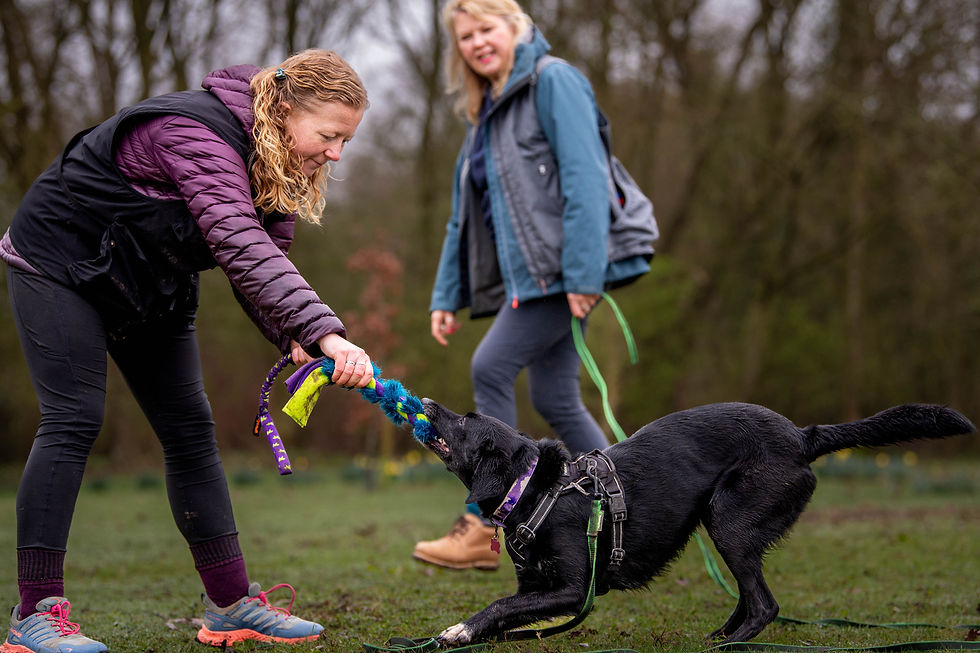
Myth 3: "Toys And Tug Make Hunting Worse"
This one comes from a good place, I get it. If chasing's the problem, surely a squeaky toy or a game of tug just throws petrol on the fire?
In practice, play done with games that are trained, is one of the most useful tools you've got. Tug, flirt poles and scatter games mimic parts of the predatory sequence, the chase, the grab, the shake, in a version you control. Your dog gets to complete the sequence with you, rather than chasing it alone in the bushes.
The key word is teaching them games they know how to play. A clear start cue, a clear stop cue, and a wind down at the end. Play without structure can wind your dog up. Play with structure teaches them how to switch off again, which is the skill most chasing dogs are actually missing.
Try this: The watch and reward game
Next time your dog spots anything on a walk mark it using a word or clicket. This helps them learn to notice things with you, hunting and spotting things together.
You're teaching them that noticing things, including wildlife with you is just as rewarding as chasing it alone. Handout for Notice Things here
Frequently Asked Questions
Will my dog really not grow out of chasing?
Not on its own. Prey drive tends to strengthen around adolescence rather than fade, so it needs a structured outlet rather than time alone to resolve it.
Why doesn't ignoring the chase work?
Because the chase itself is self rewarding. Your dog's brain releases dopamine the moment they lock onto movement, so your attention, or lack of it, doesn't change the reward they're getting.
Can I still play fetch or tug with a dog who chases wildlife?
Yes, when it's played with clear boundaries, a start cue, a stop cue, and a wind down. roll the toy rather than throw a great distance or create a noise in hedgrow, then practice the notice things game!
Structured play gives your dog a safe way to complete the predatory sequence with you instead of chasing it alone.
Want to learn how this could work for your dog? Drop me an email at hello@barkshiredogtraining.com and let's have a chat about the unique ways your dog sees the world or sign up to weekly newsletter for more stories.



Comments